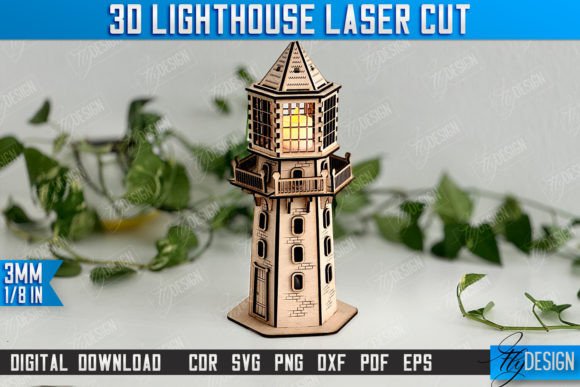
3D Lighthouse Tower Model CNC File for Laser Cutting and Other Art Amp
I recently received a request from a boutique coastal home decor brand looking to expand their product line. They wanted a centerpiece design that felt authentic, nautical, and structurally interesting without relying on cliché anchor motifs or overly literal beach imagery. The goal was to create a sophisticated visual identity for a new series of laser-cut wooden wall art and branded packaging. This is where 3D Lighthouse Tower Model CNC File entered the workflow. As a designer who frequently navigates the intersection of digital assets and physical production, I evaluated this asset not just as a graphic, but as a functional tool for manufacturing and branding.
First Impressions and Visual Mood
The initial download revealed a file structure optimized for precision cutting. Unlike standard vector illustrations meant purely for screen display, this asset carries the weight of physical fabrication in mind. The visual mood is clean, architectural, and timeless. It avoids the cluttered details often found in amateur clipart, offering instead a streamlined silhouette that commands attention. For a client project focused on brand identity, this clarity is crucial. It suggests stability and guidance—core values for a coastal lifestyle brand.
When placed on a mockup of a kraft paper box, the lighthouse didn’t look like a sticker slapped onto the surface; it looked integrated into the material. The design supports a modern design aesthetic that appeals to consumers looking for handmade quality with professional polish. It bridges the gap between graphic design asset and tangible product, making it an ideal choice for small business branding that needs to stand out in crowded marketplaces like Etsy or print-on-demand platforms.
Performance in Real Design Situations
In my experience, the true test of any design element is its versatility across different mediums. Here is how this asset performed during our concept development phase:
- Packaging Design: The clean lines of the lighthouse tower allowed us to use it as a primary logo mark. When paired with a minimalist sans serif font, it created a strong visual hierarchy. The negative space within the tower’s structure provided natural breathing room, preventing the design from feeling cramped on small labels.
- Social Media Graphics: For Instagram posts and Pinterest pins, the asset worked beautifully as a hero graphic. Its distinct shape remained recognizable even at smaller thumbnail sizes, which is essential for social media graphics where first impressions dictate engagement.
- Merchandise and Stickers: We tested the design for vinyl stickers and t-shirt prints. The contrast between the solid cut lines and the engraved details translated well to both materials. It added depth to what could have been a flat design, elevating the perceived value of the final product.
- Web Design and Editorial: On the brand’s website, the asset served as a decorative accent in the header and footer sections. It reinforced the editorial design theme without overpowering the text content, demonstrating its utility in maintaining brand consistency across digital touchpoints.
Strategic Placement: Where It Shines and Where to Pause
Not every design element fits every context, and understanding these nuances is key to professional execution. This lighthouse model excels in large layout areas and hero graphics. Its structural integrity makes it perfect for product mockups where you want to showcase the craftsmanship of a physical item. It also serves as an excellent decorative accent for themed collections, such as summer campaigns or maritime-inspired events.
However, caution is required in specific scenarios. In very small sizes, such as favicon applications or tiny social media icons, the intricate details may become muddy or illegible. In crowded layouts with competing visual elements, the lighthouse might compete for attention rather than supporting the message. Additionally, for projects requiring ultra-minimalist branding or strict corporate materials, the ornamental nature of the 3D effect might feel too casual. Always assess the visual hierarchy to ensure the asset enhances rather than distracts from your core message.
Technical Considerations for Commercial Use
Before integrating 3D Lighthouse Tower Model CNC File into a paid client project, several technical checks are non-negotiable. First, always test the design in black and white. Color can mask poor contrast issues, but monochrome reveals the true strength of the line work. Check how the design performs on both light and dark backgrounds to ensure it maintains its professionalism and visual trust.
Preview the asset at various scales. A design that looks impressive on a large poster may fail when scaled down for a mug or a tote bag tag. Place the vector on real-world mockups to gauge its impact. If the file includes transparency, inspect the PNG layers carefully to ensure no unwanted artifacts remain. For laser cutting projects, verify that the RED line is designated for CUT and BLACK line for ENGRAVE, as specified in the product description. Compatibility with your specific software and machine is critical to avoid costly errors in production.
Furthermore, consider the typography pairing. This asset has a strong, slightly rustic character. It pairs best with sturdy serif fonts or clean sans serifs. Avoid delicate script fonts unless you are aiming for a highly stylized, contrasting look. Confirm the commercial license terms explicitly. Using a design asset for a client project requires clear rights to reproduce and distribute the work commercially. Ensure you have the necessary permissions to use the commercial design for end products sold to customers.
Final Verdict for Designers and Creators
For designers working on creative marketplace products, Etsy products, or print-on-demand services, this lighthouse model offers a high return on investment. It provides a ready-made, high-quality focal point that saves time on original illustration while delivering a polished result. It is particularly valuable for handmade business owners who need to maintain a consistent aesthetic across multiple product types.
The asset successfully balances artistic appeal with functional precision. It supports marketing visuals that feel authentic and engaging, helping brands connect emotionally with their audience. Whether used for sticker design, t-shirt design, or packaging design, it adds a layer of sophistication that elevates the entire project. By conducting thorough testing and respecting the technical constraints of laser cutting and digital reproduction, designers can leverage this asset to create compelling, market-ready designs that resonate with consumers and meet professional standards.